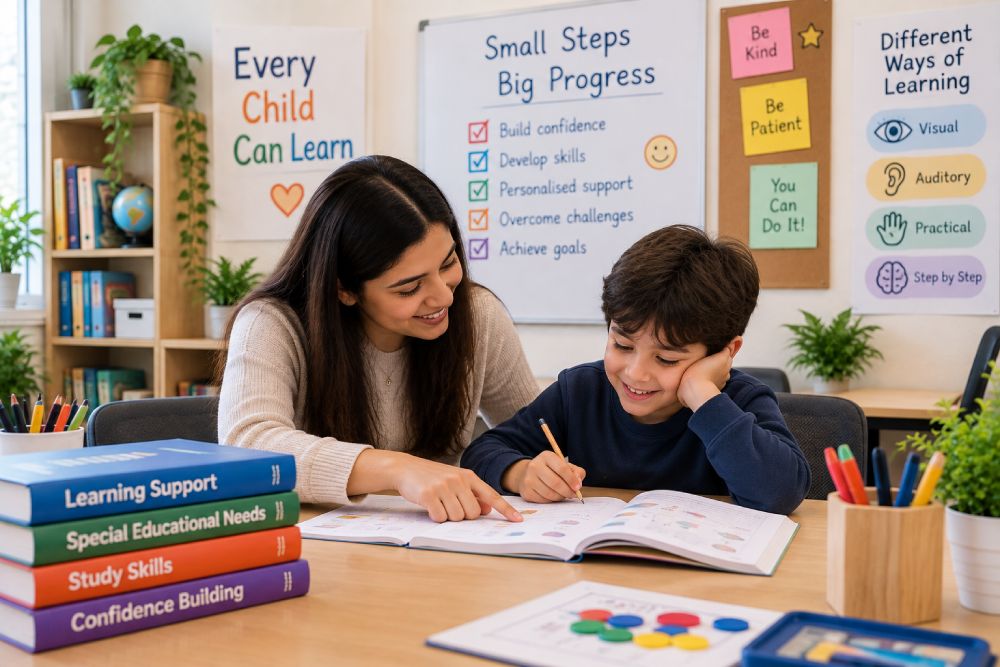
Each child is unique in his or her learning style and some children require extra support in their learning. There may be problems in learning to read, write, concentrate, remember or organise.
Learning in the classroom can, at times, seem overwhelming due to these challenges. Confidence can be lost also in children when they struggle with tasks.
Individual tutoring can provide a more personalised learning experience. Learning pace, learning needs and learning strengths can be taken into account when adapting the lessons.
Tutoring for children with learning difficulties can focus on specific skills requiring additional practice. It can also help establish a climate in which kids feel free to ask questions.
Through ongoing support, students can build academic competencies and self-confidence. There are ways to make learning easier.
Children with learning difficulties may have a variety of problems. Children may have difficulty reading or spelling.
For some others maths, concentration, memory or organisation may be difficult. Dyslexia, dyscalculia, and ADHD may affect learning experiences. Organisations such as the British Dyslexia Association provide free advice and resources to help parents understand these specific learning difficulties and the support options available.
The need for every child is unique. Supporting Education thus should be based on the person or people involved, and should not be based on one approach.
Common areas requiring additional support include:
Understanding these challenges is an important first step. It allows parents and educators to consider suitable strategies.
Classroom teaching often involves larger groups and shared lesson objectives. Individual tutoring provides more opportunities for personalised instruction.
A tutor can spend additional time on difficult concepts. They can also adjust explanations when a particular approach is not effective.
Lessons can include different learning methods. These may involve visual materials, verbal explanations, practical activities, or repetition.
This flexibility can make complex information easier to understand. It can also help children discover learning methods that suit them.
Some children need more time to process new information. Others may understand concepts quickly but need additional practice.
Individual tutoring allows lessons to move at a suitable pace. Children can revisit challenging topics without feeling rushed.
This can reduce frustration and encourage a more positive attitude towards learning.
Academic difficulties can sometimes affect a child's self-esteem. Repeated mistakes may make children reluctant to attempt challenging tasks.
Supportive tutoring can create opportunities for small, achievable successes. These successes can gradually improve confidence.
Tutors can break larger tasks into manageable steps. Children can then focus on one skill before moving towards more complex work.
Positive feedback is also important. It helps children recognise their progress rather than focusing only on mistakes.
Confidence can encourage children to participate more actively in their education. It may also help them become more willing to tackle unfamiliar tasks.
Support for learning difficulties should focus on the areas where a child needs help.
A tutor can identify specific skills requiring additional practice. Lessons can then provide repeated opportunities to strengthen those areas.
For example, a child struggling with reading may need support with phonics. Another child may need help with comprehension or vocabulary.
Targeted practice can prevent lessons from becoming unnecessarily broad. It allows learning time to focus on practical goals.
Progress can also be reviewed regularly. This helps parents understand which areas are improving and which need further attention.
SEN tutoring can provide tailored educational support for children with special educational needs. Parents can also refer to the official GOV.UK guide on special educational needs and disability (SEND) to understand what support their child is entitled to at school.
The approach should reflect the child's individual learning profile. Tutors may adapt teaching methods, resources, instructions, and lesson activities.
Children may benefit from:
A calm learning environment can also be valuable. Children may find it easier to concentrate when distractions are reduced.
SEN tutoring should complement existing educational support. Parents, schools, and tutors can work together where appropriate.
Learning difficulties can affect more than individual academic subjects. Some children also struggle with organisation and independent study.
Tutoring can help children develop practical study habits. These habits can support their education beyond individual tutoring sessions.
Useful skills include:
These skills can help children become more independent learners. They can also make academic responsibilities feel more manageable.
Children learn more effectively when information is presented in an accessible way. Tutors can adapt materials to support different learning preferences.
For example, visual learners may benefit from diagrams and colour-coded information. Other learners may respond better to verbal explanations or practical examples.
Technology can also provide useful learning tools. Educational software, audio resources, and interactive activities can support traditional teaching methods. The charity Scope also offers practical guidance for parents on finding the right educational support for a child with additional needs.
The aim is not simply to make lessons easier. It is to make learning more accessible while maintaining meaningful academic goals.
Parents can reinforce tutoring through simple activities at home. Regular routines can help children practise skills without excessive pressure.
Reading together can support literacy development. Short mathematical activities can reinforce number skills.
Parents can also encourage children to organise their school materials. Simple checklists can help develop independent routines.
Communication between parents and tutors can be valuable. Sharing observations can help adults understand a child's progress and challenges.
A consistent approach can provide children with clearer expectations. It can also create stronger support across home and tutoring environments.
Parents should consider several factors when exploring additional educational support.
Important considerations include:
A suitable tutor should understand that learning progress can vary. Patience and flexibility are important parts of effective support.
The relationship between the child and tutor also matters. Children are more likely to engage when they feel respected and understood.
Children with learning difficulties can benefit from patient, structured, and personalised educational support.
House of Tutors can provide additional learning guidance based on individual requirements. Focused tutoring can help children practise essential academic and study skills.
The aim is to create positive learning experiences while encouraging greater independence.
With consistent support, children can develop skills at a pace that suits their needs. They can also gain confidence in their ability to learn.
Learning difficulties do not define a child's academic potential. The right support can help children understand concepts and develop practical learning strategies.
Personalised tutoring can provide focused attention and flexible teaching methods. It can also help children build confidence through achievable learning goals.
Whether a child needs literacy support, mathematics practice, or study guidance, individual tuition can help.
Consistent support can make academic challenges feel more manageable. It can also encourage children to become more confident and independent learners.
Tutoring provides personalised educational support based on a child's specific learning needs. Lessons can focus on academic skills, confidence, and independent learning.
Tutoring can provide targeted practice, individual explanations, and flexible teaching methods. Children can work through challenging concepts at an appropriate pace.
SEN tutoring is tailored educational support for children with special educational needs. Teaching methods and resources can be adapted to individual requirements.