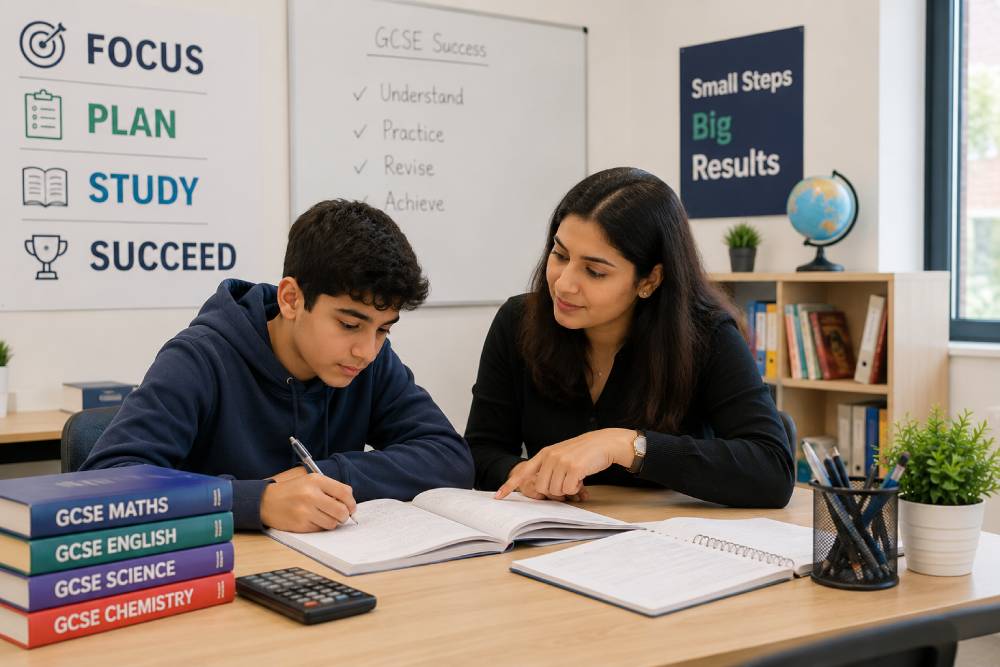
Selecting the right GCSE support can have a significant impact on the confidence, knowledge and exam preparation of a student. However, given the plethora of tutoring services available, it can prove difficult for parents and students to know what services are truly appropriate.
If your child is learning GCSE Maths, English, Science or any other subject, the best tuition provider should provide more than just 'more lessons'. It should be aware of the GCSE curriculum, recognise learning gaps, give the student useful feedback and assist the student in being an independent learner.
Quick Answer
Finding the right GCSE tuition centre depends on your child's subject needs, current performance, learning style, and exam goals. Before enrolling, compare tutor experience, class size, teaching methods, progress tracking, and convenience.
| What to Check | Why It Matters |
|---|---|
| Tutor Experience | Ensures the tutor understands GCSE subjects and exam requirements |
| Exam Board Knowledge | Helps students prepare for their specific GCSE specification |
| Class Size | Smaller groups can provide more individual attention |
| Progress Tracking | Shows whether your child is making meaningful improvement |
| Location and Schedule | Makes regular attendance easier and more consistent |
Choosing a centre begins with knowing the type of support your child requires. It is important to note that individual students who have a difficulty with the underlying concepts may need to have a different programme from those who want to achieve high grades. The best GCSE tuition centre provides experience teaching, tailored support and relevant GCSE knowledge besides frequent progress monitoring and a learning atmosphere that encourages students to ask questions.
Before deciding on a centre, think about the options, including subjects, current grades, target grades, the exam board, the learning style and the extra assistance that the student requires. Here are some things that can help you become more focused.
Don't search the internet for tuition centres near me without first determining why there is a need for extra support.
Ask questions such as:
For instance, a student who has a good understanding of GCSE Maths but has been losing marks as a result of exam technique may require timed exercises or practice papers. Another student may require review of algebra, geometry or other elementary concepts.
Talking to the student's school or subject teacher can also be helpful for information on areas that require attention.
Not every tutor teaches GCSE subjects in the same way. GCSE students need support that reflects their curriculum, assessment requirements, and examination structure.
When comparing centres, ask about:
A good centre should be able to explain how lessons are adapted to different students rather than using exactly the same approach for everyone.
Good GCSE tuition isn't simply about giving students more worksheets. Students need explanations that make difficult concepts easier to understand.
A strong tutor should be able to change their approach when a student is struggling.
For example, they might use:
The teaching environment should also encourage students to ask questions without feeling embarrassed. This can be particularly valuable for pupils who are reluctant to speak up in a busy classroom.
One of the most important features of effective GCSE tuition is knowing whether the support is actually working.
A good centre should have a way to monitor progress rather than simply providing lessons without reviewing results.
Progress may be assessed through:
Progress isn't always immediately reflected in exam grades. Improved confidence, stronger understanding, better revision habits, and greater willingness to answer questions can all be useful early signs.
Parents may come across many academic tutoring classes when researching GCSE support. Don't judge them solely by price, location, or advertising claims.
Instead, compare what is actually included.
| Feature | What to Check |
|---|---|
| Teaching | Tutor experience and GCSE subject knowledge |
| Classes | Group size and lesson format |
| Assessment | How student progress is measured |
| Resources | Whether students receive useful revision materials |
| Communication | How parents receive updates |
A centre that costs slightly more may provide considerably more individual support. Likewise, a cheaper option may be perfectly suitable if it provides strong teaching and a structured programme.
As exams approach, GCSE students need more than general subject teaching. They need to learn how to apply their knowledge under examination conditions.
Effective revision support may include:
Students should gradually become more confident at reading questions, planning answers, checking their work, and responding to different question styles.
Once your child starts tuition, give them enough time to settle into the new routine. Improvement can take time, especially if there are significant learning gaps.
Look for signs such as:
Parents should also talk to their child regularly. A pupil may be improving academically but still feel overwhelmed, or they may enjoy the lessons while needing a different level of challenge.
Finding the Best GCSE Tuition Centre Near Me isn't simply about choosing the closest provider. The right centre should match your child's academic needs, learning style, subject requirements, and GCSE goals.
Start by identifying the areas where support is needed. Then compare tutor experience, exam board knowledge, class sizes, teaching methods, progress tracking, revision support, and practical arrangements.