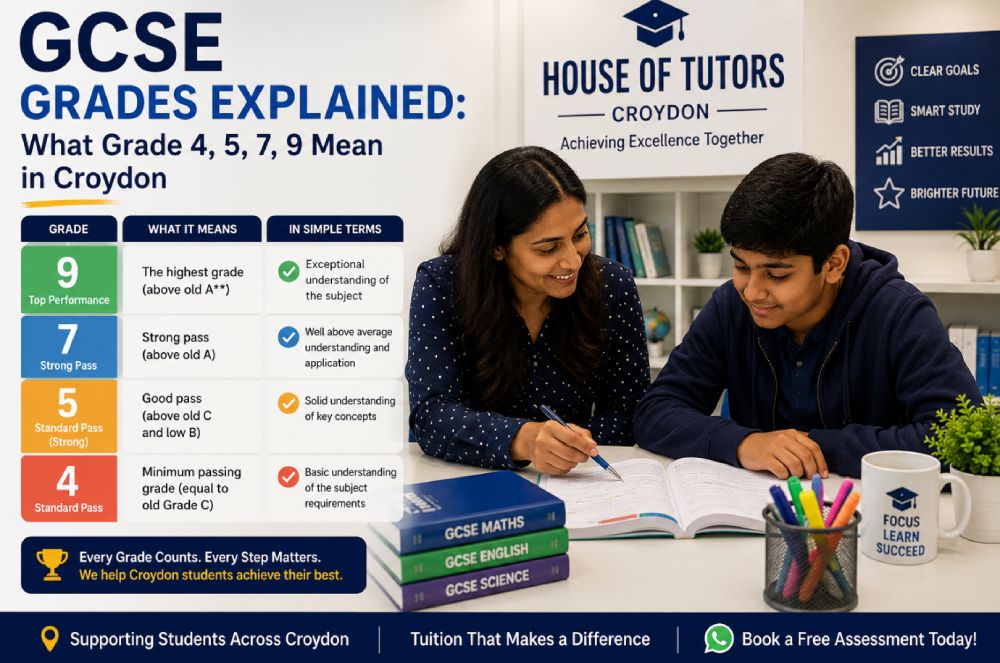
Students and parents can be confused by GCSE results. The transition to a numeric grading is raising a lot of queries. Many people are still contemplating what each grade represents. They also wonder what is a good GCSE grade for college, sixth form or university. This guide offers GCSE grades explained in simple language. It outlines the GCSE 9-1 system, clarifies what each grade means (4, 5, 7 and 9) and demonstrates how each would impact future opportunities. By the end, you will feel more confident when reading GCSE results and planning the next steps.
The GCSE 9-1 grading system replaced the traditional A* to G grading scale in England. It was implemented to provide additional differentiation for the top achieving students.
The new scale runs from 9 to 1:
This system enables schools and employers to better recognise outstanding performance.
Many students focus on grades 4, 5, 7, and 9 because these grades often influence future education choices.
Grade 4 is considered a standard pass. It replaces the lower end of the old C grade. Many colleges accept Grade 4 in English and Maths. However, some competitive courses may ask for higher grades. A Grade 4 shows that a student has achieved the expected national standard.
Grade 5 is known as a strong pass. It sits above the standard pass and demonstrates stronger subject knowledge. Many sixth forms prefer students to achieve Grade 5 or above in core subjects. A Grade 5 also provides greater flexibility when applying for further education.
Grade 7 is broadly comparable to the old A grade. Students earning Grade 7 have shown excellent understanding and consistent performance. Competitive sixth forms and scholarship programmes often look favourably on applicants with several Grade 7 results. Grade 7 also provides a strong foundation for A Levels.
Grade 9 represents exceptional academic achievement. Only a small percentage of students achieve this top grade. It demonstrates excellent subject mastery and outstanding examination performance. Although universities appreciate Grade 9 results, they also consider A Level performance and personal statements.
Many families ask, what is a good GCSE grade?
The answer depends on your future goals.
Generally:
For many students, achieving Grades 5 and above in English and Maths creates more educational opportunities.
Universities rarely judge applicants solely on GCSE results. Strong A Level grades usually carry greater importance.
GCSE grades influence several important decisions after Year 11.
These include:
Good GCSE results also build confidence before progressing to more advanced qualifications.
Employers usually expect applicants to achieve at least Grade 4 in English and Maths.
Many apprenticeships also require these minimum grades.
Universities mainly focus on A Levels or equivalent qualifications. However, many degree courses still require GCSE English and Maths at Grade 4 or above.
Highly competitive universities may consider stronger GCSE profiles during admissions.
Students can improve their performance by following consistent study habits.
Useful strategies include:
Professional tuition can also help students strengthen difficult subjects.
Many families choose experienced tutors for personalised support before examinations.
Preparing for GCSE examinations becomes easier with expert guidance.
House of Tutors provides personalised tuition designed around each student's learning style. Experienced tutors identify knowledge gaps and build confidence through structured lessons.
Whether students need support in English, Maths, or Science, tailored tuition helps improve understanding and examination technique. This personalised approach often leads to stronger academic performance and greater confidence.
Several myths continue to confuse students and parents.
Here are a few common misconceptions:
Understanding these facts helps families make informed educational decisions.
Understanding the GCSE 9-1 grading system makes exam results much easier to interpret. This guide has provided GCSE grades explained in a clear and practical way. It has also answered the common question, what is a good GCSE grade. Whether your goal is sixth form, college, or university, knowing what each grade represents helps you plan with confidence. Every student's journey is different, and consistent preparation remains the key to success.
Ready to Improve Your GCSE Results?
If you want expert support before your exams, House of Tutors is here to help. Our experienced tutors provide personalised lessons that build confidence and improve results. Contact House of Tutors today to discover how tailored tuition can help you achieve your academic goals.